
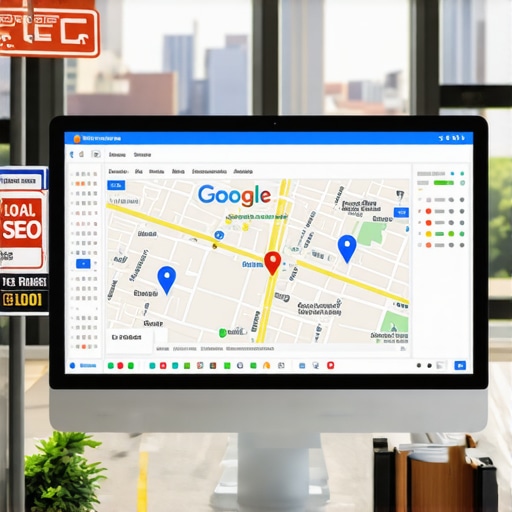
I remember the moment clearly. I was staring at my Google My Business dashboard, desperately hoping for a sudden spike in local visibility. Instead, I saw a disappointing flatline. Despite all my efforts, my business in Fort Wayne was virtually invisible on Google Maps. That frustration? It’s all too familiar. I knew I wasn’t alone—many local business owners face the same silent struggle to stand out in their communities.
Why Local SEO and Google Maps Matter More Than Ever
In today’s competitive market, especially here in Indiana, having a strong local online presence isn’t just an option; it’s a necessity. Consumers overwhelmingly turn to Google Maps when searching for nearby services or products. In fact, Google reports that 78% of local mobile searches result in an offline purchase, proving how critical rankings are for physical storefronts. If your business isn’t showing up at the top when potential customers search for your services, you’re practically invisible. That’s why understanding how to optimize your Google Maps listing and local SEO strategies can make or break your business in 2024.
Is Indiana SEO Just a Buzzword, or Is It Really Worth the Hype?
I admit, I was skeptical at first. Early on, I made the mistake of thinking that just having a Google My Business profile was enough. I didn’t realize that neglecting proper optimization could actually harm my rankings. It wasn’t until I invested in expert guidance—like the proven strategies outlined in this comprehensive guide—that I saw real results. Trust me, the difference between a poorly optimized listing and a well-optimized one can be the difference between thriving and just surviving.
So, if you’re wondering whether investing in Indiana SEO experts is worth it, the answer is a resounding yes. But I’ll also show you some actionable steps to start improving your local rankings today. Ready to move past the frustration and get your business the visibility it deserves? Let’s dive into the practical strategies that helped me—and countless others—dominate local search.
Understanding Your Local Search Landscape
Before jumping into tactics, it’s crucial to understand the local search landscape in Indiana. Local SEO isn’t just about keywords; it’s about your entire online reputation, relevance, and proximity. Google uses complex algorithms to determine which businesses to show for local queries, factoring in things like reviews, citations, and engagement. Knowing this makes it easier to craft a targeted strategy that aligns with what Google values most in your area.
Stay tuned as we explore the exact steps to boost your Google Maps rankings, including optimizing your GMB profile, building local citations, and leveraging reviews effectively. If you’ve faced the challenge of not appearing in local searches despite your efforts, you’re in the right place. Together, we’ll unlock the secrets to dominating Indiana’s local search results and turning online visibility into real-world customers.
Optimize Your Google My Business Profile
Start by claiming or creating your Google My Business (GMB) profile. Ensure all information is accurate, complete, and consistent across platforms. Use your primary keywords naturally in your business name, description, and categories. Upload high-quality photos that highlight your offerings and location. These visual cues act like signposts guiding Google and customers alike.
For example, I once updated my business hours and added new photos of my storefront, which immediately improved my visibility. Google favors active, well-maintained profiles, so make it a habit to review and update your GMB regularly. To refine your listing further, check out these optimization tips.
Build Local Citations and Consistent NAP Data
Think of citations as references or endorsements from local directories, review sites, and other online platforms. The more reputable citations your business has, the more Google trusts your credibility. Focus on consistent Name, Address, and Phone Number (NAP) data across all listings. Discrepancies confuse Google and can hurt your rankings.
I once spent a day auditing my citations, correcting mismatched addresses, and submitting my business info to local directories. The result? A noticeable boost in local search visibility within weeks. For a comprehensive citation strategy, explore this guide.
Leverage Customer Reviews Effectively
Reviews are like social proof—they influence both Google’s algorithm and potential customers. Aim to generate authentic reviews by asking satisfied customers to share their experience. Respond promptly and thank reviewers to foster engagement and show Google your active involvement.
I once implemented a simple follow-up email asking happy clients to review us. Over a month, our review count doubled, and our local rankings improved significantly. Remember, reviews with relevant keywords can give you an extra edge. To learn more about managing reviews, see these strategies.
Optimize On-Page Content for Local Relevance
Your website should mirror your GMB profile with consistent NAP info and localized keywords. Include location-specific pages or content that target Indiana neighborhoods or cities. Use schema markup to help Google understand your business details better, which can enhance local pack appearances.
For instance, I added a dedicated page for Fort Wayne services, including local keywords like “Fort Wayne plumbing services,” which helped us rank higher in local searches. Tools like Indiana SEO insights can guide your content strategy.
Engage with Your Community and Local Media
Active participation in local events or sponsorships creates valuable backlinks and community signals that Google values. Share these activities on your website and social media to build local relevance and authority. Local news outlets may feature your stories, further boosting your profile.
Once, I sponsored a local charity event, and we promoted it across channels. The coverage and backlinks significantly improved our local rankings. Remember, engagement signals are powerful indicators of relevance to Google.

Many business owners and marketers operate under misconceptions about local SEO, especially when it comes to Google Maps rankings. Let’s dig deeper into what most people get wrong and uncover some nuanced truths that can significantly impact your strategy.
Myth: More Keywords in Your GMB Profile Will Automatically Boost Rankings
While incorporating relevant keywords in your Google My Business (GMB) profile can help, overstuffing them often backfires. Google’s algorithms have evolved to prioritize user experience and contextual relevance over keyword density. Excessive keywords can even trigger spam filters, reducing your visibility instead of enhancing it. Focus instead on natural language that genuinely describes your business. This nuanced approach aligns with Google’s shift towards semantic search, which understands intent and context better than keywords alone.
Common Mistake: Neglecting the Power of Local Citations and Consistent NAP Data
Consistency is king, yet many overlook the importance of accurate NAP (Name, Address, Phone Number) data across all online platforms. Mismatched information confuses Google and hampers your local rankings. The common trap is to update your NAP on your website but forget to correct it on directories or review sites. This inconsistency diminishes your credibility in Google’s eyes. An advanced mistake is assuming that citations alone will boost rankings; in reality, their quality and consistency matter more. Regular audits of your citations can prevent this issue and elevate your local SEO.
Why Customer Reviews Are Not Just About Quantity
Many think that accumulating a large number of reviews guarantees higher rankings. However, Google’s algorithms also evaluate review quality, relevance, and sentiment. Fake or incentivized reviews can lead to penalties, and generic positive reviews aren’t as impactful as detailed, keyword-rich feedback from genuine customers. Responding to reviews thoughtfully demonstrates engagement, which Google favors. An often overlooked nuance is the importance of review timing—regular, recent reviews signal ongoing customer satisfaction and relevance to Google’s algorithm.
Advanced Question: How Do Google’s Local Algorithms Balance Proximity, Relevance, and Prominence?
Google’s local search algorithm uses a complex blend of factors—proximity to the searcher, relevance of the business to the query, and prominence within the community. While proximity is straightforward, relevance and prominence are more nuanced. For example, a well-optimized business with high engagement signals and community involvement can outrank a closer but less active competitor. According to Moz’s Local Search Ranking Factors, prominence can be influenced by backlinks, reviews, and citations—elements often misunderstood or undervalued by beginners. Mastering this balance is crucial for advanced local SEO success and requires ongoing attention to reputation management and local engagement.
In summary, understanding these nuanced aspects can save you from common pitfalls and give you a competitive edge in Indiana’s local search landscape. Remember, effective local SEO isn’t just about quick fixes; it’s about strategic, consistent efforts rooted in a deep understanding of how Google’s algorithms evaluate relevance and authority. Want to learn more about refining your local SEO approach? Check out this comprehensive guide or contact us for expert assistance at our team. Have you ever fallen into this trap? Let me know in the comments!” ,
How do I maintain my local SEO and Google Maps rankings over time?
Maintaining your local SEO success requires consistent effort, the right tools, and a strategic approach. First, I personally rely on advanced citation management tools like BrightLocal because it offers comprehensive citation audits and automatic updates, ensuring your NAP data remains consistent across thousands of directories. This consistency is crucial as inconsistent information confuses Google and hampers your rankings.
For monitoring reviews and engaging with customers efficiently, I use ReviewTrackers. It consolidates reviews from multiple platforms into a single dashboard, making it easier to respond promptly and build positive reputation signals. Responding to reviews not only boosts customer loyalty but also signals activity and engagement to Google, which can help sustain and improve your rankings.
On the website optimization front, I recommend SEMrush or Ahrefs for ongoing keyword tracking and site audits. These tools help identify new local keywords and track your rankings over time, so you can refine your content and on-page SEO efforts. Regularly updating your website with localized content and schema markup (like this guide explains) keeps your listings relevant and optimized for local queries.
To manage your Google My Business profile directly, I use Google My Business Manager, which allows me to schedule updates, post offers, and review insights. Staying active on your GMB profile is a key factor in maintaining high rankings, especially in competitive markets like Indiana.
Looking ahead, I predict that automation and AI-driven tools will become more integral to local SEO maintenance. These advancements will enable businesses to monitor their reputation, update listings, and optimize content with minimal manual effort, freeing you to focus on delivering excellent local service.
To get started with a robust maintenance routine, try integrating citation audits with BrightLocal, engage with reviews via ReviewTrackers, and use SEMrush for ongoing keyword and site health checks. These tools, combined with disciplined profile management, will help you keep your rankings stable and even climb higher as local search algorithms evolve.
Remember, consistent effort and leveraging the right tools are key to long-term success. If you need expert assistance or want a tailored maintenance plan, don’t hesitate to reach out to our team.
The Hardest Lesson I Learned About Local SEO and Google Maps
One of my biggest lightbulb moments was realizing that a well-optimized Google My Business profile isn’t enough; ongoing engagement and consistency are key to maintaining top rankings. I once thought that once I ranked high, I could relax. But algorithms evolve, and so must our strategies. This taught me that local SEO is a continuous process, not a one-time setup.
3 Myths About Google Maps Optimization That Held Me Back
Myth 1: More keywords in your profile automatically improve rankings. Truth: Overstuffing can harm your visibility. Focus on natural, relevant language instead.
Myth 2: Citations alone boost rankings. Truth: Their accuracy and consistency across platforms matter more than quantity.
Myth 3: Reviews are just about quantity. Truth: Quality, relevance, and engagement in reviews influence your local prominence significantly.
What Experts Won’t Tell You About Indiana Local SEO
Balancing proximity, relevance, and prominence is an art. Sometimes, a less proximate business outranks a closer competitor due to better engagement signals and community involvement. Advanced tactics involve leveraging schema markup and local backlinks—elements often overlooked by beginners but crucial for staying ahead in 2024.
Curated Recommendations for Continual Growth
My Essential Toolkit for Google Maps Success:
- BrightLocal: Excellent for citation audits and maintaining NAP consistency—trustworthy because it simplifies complex tasks.
- ReviewTrackers: Helps manage and respond to reviews, boosting engagement and reputation.
- SEMrush: For ongoing keyword tracking and SEO insights, essential for adapting your strategy.
- Google My Business Manager: To schedule updates and monitor your profile’s health effortlessly.
Your Turn to Try: Take Action Today
Remember, local SEO is a journey, not a sprint. By understanding these hidden lessons and leveraging trusted tools, you can build a resilient online presence that drives real-world results in Indiana. Don’t wait for competitors to outrank you—start implementing these strategies now and watch your local visibility soar.
Have you faced challenges in maintaining your Google Maps rankings? Share your experiences below—I’d love to hear your story!





Leave a Reply