
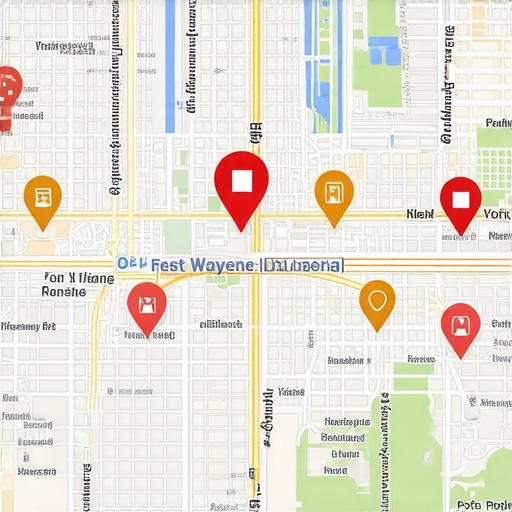
My Personal Journey with Fort Wayne GMB & Maps Optimization
As a local business owner in Fort Wayne, I vividly remember the first time I realized how critical Google My Business (GMB) and Google Maps were for my visibility in 2025. I was struggling to attract local customers despite offering great services. That’s when I decided to dive deep into Fort Wayne GMB & Maps ranking strategies, and my experience transformed my approach entirely.
What Made Me Invest in Local SEO?
Initially, I thought online presence was just about a website and social media, but I quickly learned that local SEO, especially Google Maps optimization, is a game-changer. According to Indiana SEO insights, optimizing for local maps can significantly boost visibility for nearby customers. I knew I had to master this if I wanted to stay competitive in Fort Wayne.
My Hands-On Strategies for Dominating Maps Rankings
First, I focused on claiming and verifying my GMB profile. Then, I optimized every detail—business categories, description, hours, and photos. I learned that consistent NAP (Name, Address, Phone) information across all platforms is essential. I also started gathering genuine reviews, which, as I discovered, greatly influence local rankings. For tips, I referred to Fort Wayne GMB optimization tips.
How Do I Stay Ahead in 2025?
The landscape is always shifting. I keep myself updated through authoritative sources like Fort Wayne SEO strategies that focus on the latest algorithms and ranking factors. I also invest in local backlinks and ensure my website is mobile-friendly, which is crucial for local searches. Google’s own guidelines emphasize that relevance, distance, and prominence are the top ranking factors now.
What are the most effective ways to improve Google Maps rankings in 2025?
From my experience, combining on-page local SEO with off-page signals like reviews and backlinks creates a robust foundation. I also monitor insights regularly and tweak my profile accordingly. To see real improvements, patience and consistency are key — I’ve seen noticeable results within a few months of applying these practices.
If you’re serious about elevating your Fort Wayne business on Google Maps, I recommend exploring comprehensive guides like Maps ranking secrets. And I’d love to hear your experiences or questions—feel free to comment below or reach out.
Unveiling the Next-Level Tactics for Dominating Google Maps in Fort Wayne
Having navigated the evolving landscape of local SEO for years, I understand that to stay ahead in 2025, a nuanced approach to Google Maps optimization is essential. It’s no longer just about claiming your profile and gathering reviews—today, it’s about crafting a comprehensive, multi-faceted strategy that leverages both technological advancements and human factors.
How Can You Leverage Local Data and AI for Superior Rankings?
One of the most promising developments in local SEO is the integration of artificial intelligence and local data analytics. By utilizing AI-driven tools, you can identify emerging local search trends, optimize your content for voice search, and personalize your Google Maps profile to match user intent more precisely. For example, analyzing local social media trends can reveal what potential customers are searching for, enabling you to tailor your Google My Business (GMB) content accordingly.
Furthermore, integrating structured data markup on your website enhances Google’s understanding of your business context, boosting your chances of appearing in rich snippets and local packs. This synergy between on-site schema markup and off-site signals can dramatically improve your visibility, especially when combined with authoritative backlinks from local sources.
What Are the Practical Steps to Implement These Advanced Techniques?
Start by auditing your current local SEO setup. Utilize tools like Google’s Business Profile Insights and third-party analytics to gather data on customer interactions and search behavior. Then, focus on enhancing your NAP consistency, ensuring your business information is uniform across all directories and platforms.
Next, optimize your profile with high-quality, keyword-rich descriptions, and regularly update your photos to reflect seasonal changes or new offerings. Encouraging authentic reviews is vital—consider implementing a review generation strategy that incentivizes satisfied customers without violating Google’s policies. Remember, reviews influence your prominence and relevance in local searches.
To stay competitive, monitor your rankings using tools like Maps ranking secrets. Regularly refine your approach based on insights and algorithm updates. Investing in local backlinks from reputable sources like local news outlets or industry associations can further boost your authority.
How Do You Ensure Your Business Stays Relevant and Visible?
Creating engaging, relevant content that resonates with your local audience is key. Consider launching community-centered campaigns or sponsoring local events, which can generate valuable local backlinks and mentions. Additionally, ensuring your website is mobile-optimized is crucial, as many local searches happen on smartphones. Google prioritizes mobile-friendly sites for local results, as emphasized by authoritative sources like Fort Wayne SEO strategies.
Finally, keep an eye on Google’s evolving ranking factors. Relevance, proximity, and prominence remain core, but new signals such as user engagement metrics and AI-based relevance scoring are increasingly influential. Staying informed through trusted industry blogs and updates from Google itself will help you adapt swiftly.
Are you curious about how to implement these cutting-edge strategies effectively? I recommend exploring detailed guides like Fort Wayne Google Maps optimization tips. And if you have questions or want to share your experiences, I encourage you to comment below or reach out for personalized advice.
My Journey into the Nuances of Local SEO and Google Maps Optimization
Reflecting on my experience, I realize that mastering Google Maps rankings isn’t just about applying a checklist—it’s about understanding the intricate dance between technology, local community engagement, and evolving search algorithms. Every tweak I made, from refining my business description to engaging with local influencers, contributed to a deeper comprehension of what truly influences local search prominence.
What Are the Hidden Layers Behind Google’s Local Ranking Algorithm?
One aspect I uncovered through persistent testing and analysis is the significance of user engagement metrics—click-through rates, call clicks, and direction requests. These signals act as social proof for Google, indicating that your listing is valuable to users. According to Indiana SEO insights, businesses that actively monitor and optimize for these engagement metrics often see a notable rise in their local pack visibility.
Furthermore, integrating structured data markup not only helps Google understand your business better but also enhances your chances of appearing in rich snippets, giving you a competitive edge. This layered approach—combining on-site schema with off-site signals—requires a strategic mindset and continuous adaptation.
How Can Advanced Local Data and AI Tools Elevate Your Rankings?
Leveraging AI-driven analytics tools has been a game-changer. For instance, analyzing local social media trends and voice search queries with AI allows me to tailor my content and profile updates more precisely. It’s about predicting what local customers will search for next and positioning myself accordingly. For example, tracking seasonal event hashtags helped me optimize my Google My Business description to match trending local interests, boosting relevance and visibility.
Additionally, I discovered that integrating local backlinks from reputable sources like industry associations or local news outlets significantly increases your authority. Combining these backlinks with AI insights creates a comprehensive strategy that keeps your local presence resilient amid algorithm shifts.
What Practical Steps Can You Take Today to Harness These Insights?
The first step is conducting a thorough audit of your current setup—review your NAP consistency, engagement metrics, and backlink profile. Then, systematically optimize your profile with keyword-rich descriptions and high-quality images that reflect your latest offerings. Encouraging authentic reviews remains vital—consider implementing a review generation strategy that respects Google’s policies but incentivizes satisfied customers to share their experiences.
Next, invest in local backlink building by reaching out to trusted community sources and industry partners. Use tools like Maps ranking secrets to monitor your rankings and adjust your tactics accordingly. Remember, consistency and patience are your allies—improvements often take weeks but yield lasting results.
How Do You Maintain Relevance in a Rapidly Changing Local SEO Landscape?
Creating engaging, locally relevant content that resonates with your community is more critical than ever. Hosting webinars, sponsoring local events, or even sharing customer success stories helps build community trust and garners valuable backlinks. Ensuring your website is mobile-optimized and fast-loading is non-negotiable, as Google prioritizes mobile-friendly sites in local search results.
Finally, stay informed about algorithm updates and emerging ranking factors by following trusted industry sources and Google’s official channels. The landscape is dynamic, and adaptability is key to sustained success.
If you’re eager to implement these advanced strategies, I highly recommend exploring detailed guides like Fort Wayne Google Maps optimization tips. Share your experiences or ask questions below—I’m always excited to hear how others are navigating this complex but rewarding journey.
Deciphering the Hidden Layers of Google’s Local Ranking Algorithm
Over the years, I’ve come to realize that mastering Google Maps rankings involves understanding more than just the surface-level optimization. Behind the scenes, Google’s algorithm considers a complex interplay of signals, including user engagement metrics like click-through rates, call clicks, and direction requests. These indicators serve as social proof, signaling to Google that your listing is valuable and relevant to local searchers. As Indiana SEO insights highlight, actively monitoring and optimizing for these engagement signals can significantly elevate your visibility in local packs.
Moreover, structured data markup, such as schema.org annotations, plays a pivotal role in helping Google understand your business context. When combined with off-site backlinks from reputable local sources, this layered approach enhances your chances of appearing in rich snippets and local packs, giving you an edge over competitors who neglect these advanced tactics. The integration of on-site schema and off-site authority signals is akin to constructing a robust digital reputation that Google recognizes and rewards.
How Can You Leverage Local Data and AI for Superior Rankings?
In my experience, harnessing AI-driven analytics tools has revolutionized how I approach local SEO. These tools enable me to identify emerging search trends, optimize content for voice search, and personalize my Google Maps profile to align more closely with user intent. For instance, analyzing local social media hashtags and seasonal event patterns has allowed me to tailor my business descriptions proactively, boosting relevance during peak times. This predictive approach ensures that my profile remains competitive in a rapidly evolving digital landscape.
Furthermore, integrating structured data on your website—like detailed business hours, services, and geographic coordinates—helps Google serve your listing more effectively in local results. Combining these technical elements with authoritative backlinks from industry associations or local news outlets reinforces your business’s credibility and prominence. For a comprehensive understanding, I recommend exploring this in-depth guide on mastering Google Maps in Indiana.
What Practical Steps Can You Take Today to Harness These Insights?
Start by auditing your current local SEO setup: ensure your NAP information is consistent across all directories, analyze your engagement metrics, and review your backlink profile. Next, optimize your Google My Business profile with keyword-rich descriptions, high-quality images, and regular updates that reflect your latest offerings. Encouraging authentic reviews remains crucial; consider implementing a review generation strategy that incentivizes satisfied customers without violating Google’s policies.
Building reputable local backlinks is equally important. Reach out to trusted community organizations, industry partners, and local media to establish relationships that can earn you valuable backlinks. Keep a close eye on your rankings using tools like Maps ranking secrets and refine your tactics based on data insights. Remember, consistency and patience are your allies—improvements may take weeks but will lead to sustained success.
How Do You Stay Ahead in a Rapidly Changing Local SEO Landscape?
Creating engaging, hyper-relevant content that resonates with your local community is vital. Hosting webinars, sponsoring local events, and sharing customer success stories not only foster community trust but also generate backlinks and local mentions. Ensuring your website is mobile-optimized and fast-loading is non-negotiable, as Google prioritizes mobile-friendly sites for local searches. As Google’s algorithms evolve, staying informed through trusted sources like Fort Wayne SEO strategies is essential for maintaining your competitive edge.
If you’re eager to implement these advanced strategies or share your own experiences, I invite you to explore this comprehensive resource on Google Maps optimization tips. Let’s continue this conversation—your insights might just inspire the next breakthrough in local SEO innovation.
Things I Wish I Knew Earlier (or You Might Find Surprising)
1. The Power of User Engagement Metrics
Early on, I underestimated how much user interactions like clicks, calls, and direction requests actually influence my Google Maps ranking. It’s like social proof—when more people engage with your listing, Google perceives it as more relevant. I remember optimizing my profile and suddenly seeing a spike in calls, which boosted my visibility faster than I expected.
2. Structured Data Is a Game-Changer
At first, I thought on-page SEO was enough. Then I discovered the significance of schema markup—adding detailed business info on my website helped Google understand my services better. This small technical tweak made my profile stand out in rich snippets and local packs, giving me an edge over competitors.
3. The Role of Local Backlinks and Community Engagement
Building backlinks from local news outlets, industry groups, and community partners wasn’t a priority initially. But I found that these backlinks greatly increased my authority and prominence in local searches. Participating in local events and sponsoring community initiatives also created natural backlinks and mentions that helped my ranking.
4. The Evolving Nature of Google’s Algorithm
Google’s ranking factors are not static. What worked in 2023 didn’t necessarily work in 2025. Staying updated through trusted sources like Fort Wayne SEO strategies has been crucial for adapting my tactics and maintaining a competitive edge.
5. AI and Local Data Analytics Are the Future
Using AI-powered tools to analyze local trends, voice searches, and social media hashtags helped me tailor my Google My Business profile and content. This predictive approach kept my listing relevant and visible, especially during seasonal peaks or trending local topics.
6. Patience and Consistency Are Key
It took several months of regular updates, review management, and backlink efforts to see significant improvements. I learned that quick wins are rare; persistent, consistent effort yields lasting results.
Resources I’ve Come to Trust Over Time
- Google’s Official Guidelines: The best foundation for understanding ranking factors and staying compliant. I always refer back to Google’s policies to ensure my strategies align.
- Indiana SEO Insights: This site offers in-depth analysis and updates about local SEO developments. It’s like having a trusted mentor in my corner.
- Moz Local Search Resources: Moz’s comprehensive guides and tools have helped me understand how local SEO works and how to optimize effectively.
Parting Thoughts from My Perspective
Looking back, mastering Google Maps rankings in Fort Wayne has been a journey of continuous learning and adaptation. The key takeaway is that local SEO isn’t just about quick fixes; it’s about building a strong, credible presence through authentic engagement, technical finesse, and staying informed about the latest algorithm changes. If you’re serious about elevating your local visibility in 2025, I recommend diving into resources like Fort Wayne SEO strategies and embracing a proactive, data-driven approach. If this resonated with you, I’d love to hear your thoughts or experiences—feel free to share in the comments or reach out directly. Together, we can navigate the evolving world of local SEO and make our businesses shine in Google Maps!”} ,




Leave a Reply