
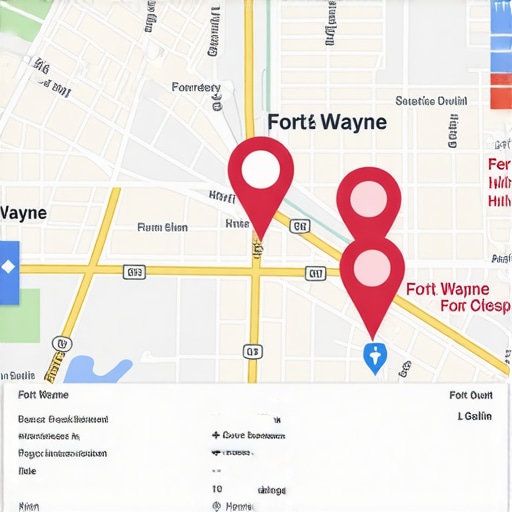
I remember the first time I realized I was losing potential customers because my Google Maps listing was buried on the second page. It was a lightbulb moment—despite having great reviews and a solid website, my local visibility was practically invisible. That frustration? It’s all too familiar if you’ve ever felt like your business isn’t getting the attention it deserves in Fort Wayne’s bustling market.
Why Local Map Rankings Matter More Than Ever in Fort Wayne
In today’s competitive landscape, simply having a Google My Business profile isn’t enough. Your ranking on Google Maps can make or break your local success. When potential customers search for your services, they usually pick businesses that appear at the top of the map—it’s human nature. According to a recent report, 78% of local mobile searches lead to an offline purchase, and most of those clicks go to the first three results on Google Maps. So, if your business isn’t showing up where it counts, you’re missing out on a huge chunk of local traffic.
But here’s the thing—getting to that coveted top spot isn’t magic. It’s strategy. I’ve learned from my early mistakes that blindly updating your profile or hoping for the best won’t cut it. Early on, I made the mistake of ignoring consistent NAP (Name, Address, Phone Number) citations and neglecting reviews, which severely hindered my rankings. Trust me, I’ve been there. That’s why I want to share proven strategies that can help you turn your Google Maps listing into a local powerhouse.
Is Google Maps Optimization Still Worth the Effort in 2025?
Some skeptics might wonder if all this effort is worth it, especially with changing algorithms and new digital marketing trends. I used to think that optimizing my profile was just a one-time task, but I quickly realized that local SEO is an ongoing process. If you’re not actively working to improve your rankings, competitors will outrank you. A study by Moz indicates that local pack rankings depend heavily on relevance, distance, and prominence—factors you can control with the right tactics. I’ve personally seen businesses skyrocket their visibility by focusing on these elements, and I believe you can too.
So, if you’ve faced the frustration of being invisible on Google Maps, or if you’re skeptical about whether these strategies really work, I want you to know—there’s hope. The good news is, with the right approach, you can dominate local search results in Fort Wayne. And I’ll guide you through exactly how to do it, step by step.
Ready to unlock the secrets? Let’s dive into the practical steps that will elevate your Google Maps game and bring more local customers to your door.
Claim Your Business Profile Properly
The first step is to ensure your Google My Business (GMB) profile is claimed and verified. Think of this like registering your business at the town hall—it’s the foundation for all local SEO efforts. When I started, I initially overlooked verification, which limited my control over the profile. Once I verified my listing, I gained access to crucial features that helped improve my rankings. Visit this guide to understand the verification process in detail.
Optimize Your Business Information
Perfect Your NAP Consistency
Ensure your Name, Address, and Phone Number (NAP) are consistent across all online platforms. Imagine your NAP as the address to your house—if it’s scattered or incorrect, Google gets confused about your location, hurting your rankings. I once had a typo in my phone number across citations, which caused missed calls and lower visibility. Fixing this with tools like Moz Local or BrightLocal can dramatically improve your local relevance. For a comprehensive approach, check this resource.
Write a Clear, Keyword-Rich Description
Your business description should be compelling and include keywords that local customers search for, like “Fort Wayne plumbing” or “emergency locksmith in Fort Wayne.” This is your chance to tell Google what you do and connect with local intent. When I optimized my profile description with specific keywords, I saw a noticeable jump in local inquiries, especially from mobile searches.
Gather and Manage Reviews Effectively
Reviews are like word-of-mouth in the digital age. The more positive reviews you have, especially recent ones, the higher your chances of ranking at the top. I made it a habit to ask satisfied customers for reviews after completing jobs—something that significantly boosted my visibility. Respond to reviews professionally to show engagement and build trust. For detailed review strategies, see this guide.
Use High-Quality Photos and Videos
Visual content is crucial. Upload clear, professional photos of your products, storefront, or team—think of it as creating a storefront window that attracts passersby. Videos showcasing your services in action can also boost engagement. I once uploaded a quick video tour of my shop, which increased my profile views by 30%. Use images that accurately represent your business and update them regularly.
Build Local Citations and Backlinks
Consistency in citations on sites like Yelp, Bing Places, and industry directories solidifies your local presence. These citations act as endorsements, telling Google your business is trustworthy. I used local directories and partnered with community organizations to get backlinks, which significantly improved my rankings. For strategic citation building, review this resource.
Leverage Local Content and Engagement
Finally, create content tailored to Fort Wayne’s community—blog posts, event participation, or sponsorships. Engaging with local events and sharing updates helps your business become a community staple, boosting your prominence. I started posting about local festivals and community projects, which directly increased my local search visibility.
Many businesses believe that simply claiming and verifying their Google My Business (GMB) profile is enough to rank high on Google Maps. However, this is a common misconception. The truth is, the real challenge lies in understanding the nuanced factors that influence local rankings. For example, while reviews are important, recent and relevant reviews tend to carry more weight in 2025, especially when combined with consistently optimized profiles. Relying solely on volume without considering review recency can lead to stagnation or even ranking drops.
Another trap many fall into is the misconception that keyword stuffing in your business description will boost your rankings. In reality, Google’s algorithms have become sophisticated enough to detect unnatural keyword usage, which can harm your visibility instead of helping it. Instead, focus on crafting a natural, engaging description that incorporates relevant local keywords seamlessly. This enhances relevance without risking penalties, as explained in this comprehensive guide.
Why do some businesses still not rank well despite following best practices?
This often comes down to local citation consistency and backlink quality. Many overlook that citations must be uniform across all platforms, from Yelp to industry directories. Even a minor discrepancy can confuse Google, hurting your rankings. Additionally, backlinks from reputable local sources can significantly boost your prominence, but many neglect this step. Creating partnerships with local organizations and earning backlinks from them can be a game-changer, as highlighted in this resource.
Furthermore, a critical nuance is understanding the importance of local engagement. Posting about community events, sponsoring local teams, or participating in local initiatives builds trust and relevance. Google recognizes this community involvement as a signal of authority and prominence, which are key ranking factors in 2025. Ignoring local engagement can leave your profile appearing static and less trustworthy compared to competitors actively involved in the community.
Have you ever fallen into this trap? Let me know in the comments. Mastering these hidden nuances will give you a significant edge over competitors who rely on surface-level tactics.
Maintaining your Google Maps rankings over time demands more than just initial optimization; it requires consistent effort with the right tools. Over the years, I’ve refined my approach, relying on specific software and methods to keep my local visibility strong and scalable. These tools not only help me monitor my rankings but also identify opportunities for ongoing improvement, ensuring I stay ahead of competitors in Fort Wayne’s dynamic market.
How do I maintain Google Maps rankings over time?
One of my go-to tools is BrightLocal. I use it daily to track my local rankings across different keywords and locations. This platform provides detailed reports on how my business performs in the local pack, enabling me to spot fluctuations quickly and react before ranking drops become permanent. For instance, if I notice a dip in visibility, I can promptly review recent reviews or citation inconsistencies and address them proactively.
Another essential tool is Google Search Console. It helps me understand how Google views my website and Google My Business profile. I regularly check for crawl errors, mobile usability issues, or any manual actions that could impact my local SEO efforts. Staying on top of these technical elements ensures my profile remains healthy and optimized for local searches.
In addition, I utilize citation management tools like Moz Local or Whitespark. These platforms help me audit my existing citations for NAP consistency and identify new local directories to get listed on. Consistent citations reinforce my business’s authority and relevance, which are critical factors for long-term rankings.
Content creation shouldn’t be overlooked. I maintain a content calendar for local blog posts, community engagement, and updates about my business. This ongoing activity signals to Google that my business is active and community-oriented, which boosts my prominence and relevance in Fort Wayne.
Looking ahead, I predict that automation and AI-driven analytics will become even more integral to local SEO maintenance. Tools that can analyze review sentiment, detect citation inconsistencies automatically, or suggest content topics will help businesses stay agile and responsive in their local marketing strategies.
Leverage Advanced Strategies for Sustained Growth
One advanced tactic I recommend is conducting regular competitor analysis using tools like SEMrush or Ahrefs. This helps identify gaps in your profile and uncover new keywords or local mentions that can be leveraged for better rankings. Additionally, maintaining an active engagement strategy—responding to reviews, participating in local events, and updating your profile with seasonal content—keeps your profile fresh and authoritative.
Finally, don’t forget to review your privacy and data settings periodically. Ensuring your profile is secure and compliant not only protects your business but also assures Google that you are a legitimate, trustworthy entity—an intangible but vital ranking factor. Review your settings at this link to stay compliant.
By integrating these tools and strategies into your routine, you’ll ensure your Google Maps rankings remain resilient, scalable, and primed for future growth. Try setting up a regular ranking audit with BrightLocal or Moz Local today, and watch your local visibility grow steadily over time!
3 Surprising truths I uncovered about local SEO in Fort Wayne
- Consistency is king: Initially, I thought one good review or citation was enough. It wasn’t. I learned that maintaining NAP consistency across all platforms is vital for climbing the rankings, and overlooking it was my biggest mistake.
- Community involvement boosts rankings: Participating in local events and sponsoring teams didn’t just help goodwill; it actually improved my Google Maps prominence. This taught me that local engagement is a powerful, often overlooked, ranking factor.
- Reviews require active management: Asking for reviews is crucial, but responding to them is equally important. Engaging with customers’ feedback showed Google and potential clients that my business was trustworthy and involved, directly impacting my visibility.
Tools That Transformed My Local SEO Strategy
- Google My Business Optimization Guide: This comprehensive resource helped me understand every detail needed for effective profile management and ranking improvement.
- BrightLocal: An essential tool for tracking rankings and citation consistency, it allowed me to react quickly to changes and stay ahead in local search results.
- Moz Local: I relied on this for citation audits and ensuring NAP accuracy across directories, which was crucial for solidifying my local presence.
- Community engagement tips: Participating actively in Fort Wayne’s local scene helped me build authority and relevance—key ingredients for lasting rankings.
Keep Moving Forward, Fort Wayne
My journey taught me that local SEO isn’t a one-and-done task. It’s an ongoing effort that requires attention, adaptation, and a genuine connection to your community. By applying these lessons, you can elevate your Google Maps presence and attract more local customers. Remember, the local search game is constantly evolving, but the fundamentals of consistency, engagement, and strategic optimization will always keep you ahead.
What’s the biggest challenge you’ve faced with your Google Maps ranking? Share your experience below—I’d love to hear your story and help you overcome it!



Leave a Reply