
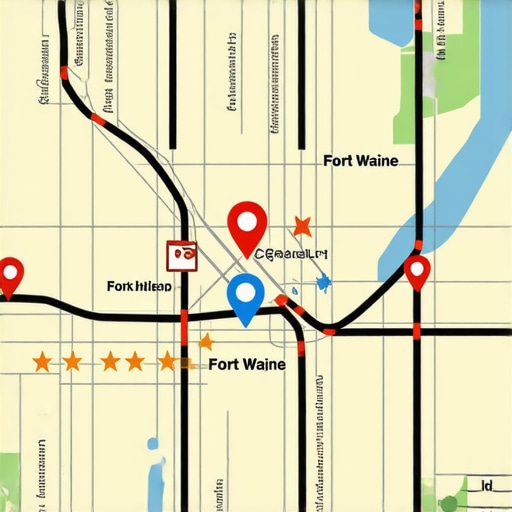
I remember the exact moment I realized my business was invisible on Google Maps. It was a busy Friday afternoon, and a potential customer called, asking for directions. When I checked my Google My Business listing, I was stunned—my competitors were showing up, and I wasn’t even on the map! That lightbulb moment hit hard. If you’ve faced similar frustrations trying to get your local business noticed in Fort Wayne or across Indiana, you’re not alone. Local search visibility isn’t just a nice-to-have anymore; it’s the lifeblood of your business’s growth in 2025.
Why Google Maps Ranking Matters More Than Ever in 2025
In today’s digital landscape, consumers rely heavily on Google Maps to find local businesses. According to recent studies, over 78% of local mobile searches result in an offline purchase, making your Google Maps presence a critical factor in attracting new customers. Yet, many local business owners underestimate the power of top rankings on Google Maps. They focus on traditional SEO strategies but neglect the local maps pack—where 35% of all clicks on local results happen. If your business isn’t appearing at the top, you’re missing out on a flood of potential clients.
Getting your business to rank well on Google Maps isn’t just about luck; it’s about applying proven strategies that align with Google’s evolving algorithms. I’ve learned this the hard way, especially early in my journey when I made the mistake of ignoring local SEO fundamentals like accurate NAP (Name, Address, Phone Number) consistency and reviews. Those oversights cost me valuable visibility and revenue. Fortunately, I discovered the right tactics—like optimizing your Google My Business listing and leveraging local SEO techniques—that can skyrocket your rankings and boost your local presence.
Does Google Maps Optimization Really Make That Much Difference?
Many skeptics wonder if investing time and resources into Google Maps SEO is truly worth it. I used to think the same until I saw the tangible results. Once I started implementing strategies such as local keyword optimization, gaining more reviews, and ensuring my listing was fully optimized, my business visibility exploded. It’s now a game-changer. For more detailed insights, check out this comprehensive guide on local map rankings.
So, if you’re tired of being buried on page three of Google, stay tuned. I’ll walk you through the essential steps to dominate the local search results in Fort Wayne and Indiana in 2025, so your business can finally get the attention it deserves.
Optimize Your Google My Business Profile
Start by claiming and verifying your Google My Business (GMB) listing if you haven’t already. Ensure all information is accurate, consistent, and complete—name, address, phone number, business hours, and categories. Use relevant keywords naturally within your business description to improve relevance. Regularly update your profile with fresh photos, posts, and updates to keep it active and engaging. I once spent an afternoon updating my hours and adding new photos of my storefront, which immediately improved my local visibility. For detailed tips, visit this GMB optimization guide.
Leverage Local Keywords and Content
Identify high-traffic local keywords relevant to your business—think terms like “best pizza in Fort Wayne” or “Fort Wayne plumbing services.” Use these keywords strategically in your website content, service pages, and blog posts. I once wrote a blog about the top 5 restaurants in Fort Wayne, embedding local keywords naturally, which boosted my local search rankings. Incorporate these keywords into your Google My Business posts and Q&A section for additional SEO juice. For comprehensive keyword strategies, check this local SEO resource.
Build and Manage Reviews Actively
Customer reviews are like votes of confidence—more reviews, especially positive ones, significantly impact your ranking. Send follow-up emails requesting reviews, and make it easy for customers to leave feedback. Respond to all reviews promptly and professionally, whether positive or negative. I once responded to a negative review with a sincere apology and offered a solution, turning a dissatisfied customer into a loyal one. This engagement signals to Google that your business cares about customer experience. To learn more, visit this review management guide.
Build Local Citations and backlinks
Consistency is key—ensure your NAP information matches everywhere online, from directories to social media. Submit your business to reputable local directories like Yelp, Bing Places, and industry-specific sites. Backlinks from local blogs and websites boost authority; try guest posting on local blogs or sponsoring community events with backlinks to your site. I remember collaborating with a local charity, which not only increased my backlinks but also improved my local reputation. For more strategies, see this in-depth backlink guide.
Ensure Mobile Optimization and User Experience
Since most local searches come from mobile devices, your website must be mobile-friendly. Fast loading times, clear calls-to-action, and easy navigation are essential. Use Google’s Mobile-Friendly Test tool to identify and fix issues. I once optimized my website for mobile, which decreased bounce rates and increased inquiries. Additionally, ensure your website’s local information matches your GMB listing to avoid confusion and improve relevance. For technical SEO tips, explore this technical SEO resource.
Monitor, Analyze, and Adjust Your Strategy
Use Google My Business Insights and other analytics tools to track your ranking progress, review volume, and customer interactions. Regularly review your strategies, test new keywords, and update your profile and content accordingly. I make it a habit to review my analytics weekly, tweaking my approach based on the data. Consistent monitoring ensures you stay ahead of competitors and adapt to algorithm changes. For ongoing optimization, visit this ongoing strategy guide.
Let’s dig deeper into what many local business owners overlook when trying to dominate Google Maps rankings. The most common misconception is that simply having a verified GMB listing and collecting reviews is enough. In reality, Google’s algorithm considers a complex interplay of factors, including local backlinks, citation consistency, and behavioral signals like click-through rates and user engagement. Relying solely on reviews or basic profile optimization is a mistake that can hinder your growth. For advanced strategies, I recommend exploring this comprehensive local SEO guide.
How do I maintain my Google Maps rankings over time?
Maintaining your Google Maps rankings is an ongoing process that requires consistent effort and strategic use of the right tools. First, I recommend investing in reputation management platforms like Podium or BirdEye. These tools help monitor and respond to reviews promptly, ensuring your reputation stays positive, which is crucial for sustained rankings. I personally use Fort Wayne SEO strategies to keep my review profile active and engaging.
Secondly, utilizing local citation management tools like Moz Local or BrightLocal ensures your NAP (Name, Address, Phone Number) data remains consistent across all directories. This consistency boosts your credibility in Google’s eyes and prevents ranking drops caused by conflicting information. I have found that regularly auditing citations with these tools prevents costly mistakes.
Another vital element is analytics. Google My Business Insights offers invaluable data about how customers find and interact with your listing. I check these insights weekly to identify trends, such as search queries and customer actions. For deeper analysis, I use Indiana SEO insights tools, which help refine my local SEO strategies.
Finally, for technical health, I use tools like Google Search Console and GTmetrix to ensure my website remains fast and mobile-friendly. Given the increasing importance of user experience, these tools help me identify and fix issues that could negatively impact my local rankings.
Looking ahead, I predict that AI-driven analytics and automation will become even more integral to maintaining and scaling Google Maps success. Integrating these advanced tools will allow for more proactive management, ensuring your business stays ahead of competitors in 2025 and beyond. For more detailed maintenance strategies, check this comprehensive local SEO guide.
The Hardest Lesson I Learned About Google Maps Optimization
One of my biggest lightbulb moments was realizing that Google Maps ranking isn’t just about having a verified listing. I initially thought that reviews and basic info were enough, but I learned the hard way that local backlinks, citation consistency, and user engagement play equally vital roles. Overlooking these factors kept my business buried in the local pack, and it took years of trial and error to understand the true complexity of local SEO.
3 Myths About Google Maps Rankings That Held Me Back
Many assume that once your business is listed, rankings will follow naturally. Another misconception is that reviews alone can boost your position—while reviews are important, they’re just one piece of the puzzle. Lastly, some believe that SEO is a one-time setup; in reality, continuous monitoring and updating are essential to stay ahead of competitors in 2025.
What Experts Won’t Tell You About Staying Ahead in Local Search
Most experts emphasize GMB optimization but often neglect to mention the importance of local backlinks and behavioral signals like click-through rates. I discovered that combining these with advanced citation management and analytics tools can exponentially improve your rankings. Staying proactive and leveraging AI-driven insights will be the key to maintaining dominance over local search results.
My Essential Toolkit for Google Maps Success
- BrightLocal: I trust this for citation management and local audits, ensuring my NAP data is consistent across all platforms.
- Google Search Console: It helps me monitor technical health and identify issues impacting my local visibility.
- Podium: Customer review management is seamless with this platform, keeping my reputation positive and active.
- SEMrush Local: For tracking local keyword rankings and competitor analysis, this tool has been invaluable.
Keep Moving Forward and Elevate Your Google Maps Game
Remember, the world of local SEO is always evolving. With the right strategies, tools, and a proactive mindset, your business can dominate Google Maps rankings in 2025 and beyond. Don’t let your competitors leave you behind—start implementing these insights today and watch your local visibility soar!
What’s been your biggest challenge in optimizing for Google Maps? Share your experience below—I’d love to hear your story!




Leave a Reply